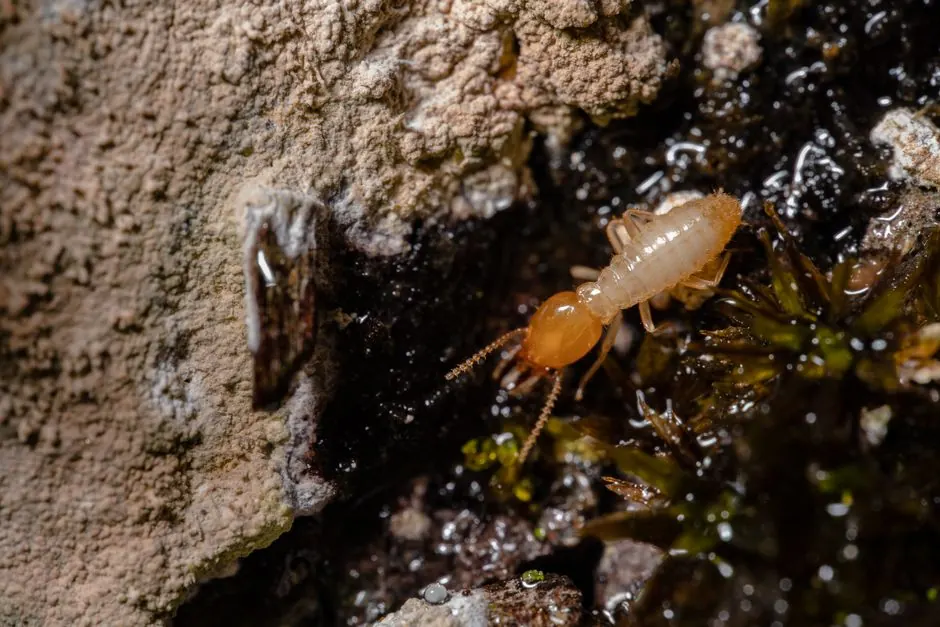
Full Termite Inspection
We check the slab edge, stem walls, garage, attic, and crawlspace where accessible. Thermal imaging cameras and moisture meters help find hidden activity. You get a written report with photos and a clear recommendation.
Every termite job starts with a full inspection and ends with a written warranty. The exact treatment depends on the termite species and your home's construction, but here is what is covered in a standard service.
We check the slab edge, stem walls, garage, attic, and crawlspace where accessible. Thermal imaging cameras and moisture meters help find hidden activity. You get a written report with photos and a clear recommendation.
We trench and rod the soil along the foundation and treat every penetration. Where concrete blocks access, we drill and inject termiticide, then patch the holes with sealant. The barrier is continuous around the structure.
We place bait stations every 10 to 20 feet around the perimeter and load them with termite-specific bait. Stations are checked quarterly and refreshed as needed. This method knocks down the colony at the source.
Driveways, patios, and garage slabs often hide the soil line termites follow. We drill through the concrete at set intervals, treat the soil below, and patch each hole with matching sealant so the surface looks clean.
You receive a written warranty that covers retreats if termites break through the treated zone. The warranty is renewable and transferable if you sell the home. We explain the coverage terms before we start work.
We come back 30 to 60 days after treatment to confirm activity has stopped. Bait stations get their first quarterly check, and we answer any questions. If you see new activity, call and we return under warranty.
Termite control Phoenix AZ is a licensed, soil-applied and bait-based service that stops subterranean termites from reaching your home's wood. We inspect the foundation, stem walls, and slab penetrations, then treat with a termiticide barrier or install bait stations around the structure. Termites in Arizona are active 12 months a year because our soil rarely drops below 50 degrees at depth. That means a colony can feed on your framing through the winter while you see nothing on the surface.
Most Phoenix homeowners call us after they spot mud tubes on the garage wall, swarmers near a sliding door, or a soft spot in a baseboard. Subterranean termite control Phoenix jobs usually start with a full inspection using thermal imaging cameras and inspection mirrors to check wall voids. If you need termite control Phoenix AZ near me, we can be on-site the same day in most of Maricopa County. The earlier we catch activity, the less wood we have to replace.
We keep it simple: inspect, treat, verify, and warranty. Here is what a typical termite job looks like from the first phone call to the final walkthrough.
Schedule
Call or book online — a real human picks up and confirms a 2-hour arrival window.
Diagnose
Licensed tech inspects on-site, then walks you through the cause and your options.
Fix
The job is completed to code and done right the first time — no shortcuts, no surprises.
Guarantee
Every job backed by a written workmanship warranty — and we stand behind it.
Thermal Imaging Cameras
We use thermal imaging to spot temperature differences behind walls that indicate termite activity or moisture. It finds colonies that a visual inspection alone would miss.
Termite Detection Devices
These monitors go into the soil around the foundation to detect termite activity before it reaches the structure. We check them on a set schedule and treat when activity shows up.
Inspection Mirrors and Moisture Meters
Mirrors let us see into wall voids and under slabs without tearing anything apart. Moisture meters confirm whether wood is damp enough to attract termites.
Insecticide Sprayers and Foggers
For perimeter and void treatments, we use calibrated sprayers and foggers to apply termiticides evenly. Proper calibration matters because the label rate is what makes the barrier work.
Bait Stations
We install in-ground bait stations from Bell Laboratories and Rockwell Labs around the perimeter. Termites feed on the bait and carry it back to the colony, which collapses the population at the source.
Exclusion Mesh and Copper Mesh
We seal utility penetrations, weep holes, and expansion joints with exclusion mesh and copper mesh. Termites cannot chew through copper, and it also keeps rodents and insects out.
Trench and Rod Soil Application
We dig a shallow trench along the foundation and rod termiticide into the soil at set intervals. This creates a continuous treated zone termites cannot cross. Where concrete blocks access, we drill and inject, then patch the surface.
Bait Station Monitoring
Bait stations are placed every 10 to 20 feet around the structure and checked quarterly. When termites feed on the bait, they carry the active ingredient back to the colony. This method eliminates the source, not just the foragers.
Integrated Pest Management
We combine inspection, exclusion, and targeted treatment rather than spraying everything. Sealing cracks with caulk and sealants reduces entry points, and monitoring catches new activity early. It is the standard approach for long-term termite control.
EPA Certified Application Standards
Every termiticide we apply follows the EPA Certified Applicator label requirements for rate, placement, and safety. We keep current on Arizona-specific label changes and document each application. That protects your warranty and your family.
01
What we do: We inspect the same day if you call before noon. The tech checks the slab edge, stem walls, and attic, then treats the active zone with a liquid termiticide and sets bait stations around the perimeter.
→ Activity stops within days, and you get a written warranty plus a follow-up inspection in 30 days to confirm the colony is dead.
02
What we do: We handle real estate deadlines with priority scheduling. A full inspection and treatment quote are delivered within 24 to 48 hours, and we coordinate with the title company for the clearance letter.
→ The closing stays on track, the buyer gets a transferable warranty, and the seller avoids a last-minute repair credit.
03
What we do: We treat the perimeter with a soil barrier and install bait stations at the likely entry points. We also seal cracks and utility penetrations with caulk and copper mesh to close the gaps they use.
→ Swarmers stop showing up inside, and the barrier keeps new colonies from establishing in the treated soil around your home.
04
What we do: We set up a scheduled service plan with quarterly bait station checks and an annual liquid barrier review. Every visit is documented with photos and a service report you can file.
→ You have a clean paper trail for each unit, and tenants stop calling about termite sightings. The warranty transfers if you sell the property.
Phoenix termite work is different from other markets because of our soil and our construction. Most homes sit on slab-on-grade or block stem walls, which gives subterranean termites a hidden highway from soil to framing. The desert soil stays warm enough at depth that colonies feed year-round, and monsoon season pushes them toward structures looking for moisture. We treat the foundation line with a liquid barrier and back it with bait stations, then seal the penetrations termites use. If you need termite inspection and treatment Phoenix AZ 24/7, we can dispatch a licensed tech fast. We also handle the concrete drilling and patching that slab homes require, so the job looks clean when we leave. From 85009 to 85083, we know the housing stock and the termite pressure that comes with it.
Central Phoenix
Older ranch homes with block stem walls and mature landscaping. Termites follow the irrigation lines and the shaded soil along the foundation.
Arcadia
Lush yards and flood irrigation create constant soil moisture, which is exactly what subterranean termites need to stay active near the structure.
Ahwatukee
Slab-on-grade homes against South Mountain. The rocky soil and temperature swings make a continuous liquid barrier essential.
Desert Ridge
Newer construction with post-tension slabs. We locate the cables before drilling so the barrier goes in without damaging the foundation.
Soil temperatures stay above 50 degrees at depth year-round
Termites feed 12 months a year in Arizona instead of going dormant in winter. That means a colony can do years of damage in the time a northern colony takes a season off.
Monsoon season pushes termites toward structures
From July through September, termites move toward homes looking for consistent moisture. We see more swarm calls in this window than any other time of year.
Slab-on-grade and block stem wall construction
These building styles hide termite runs behind stucco and inside block cores. Our inspection process focuses on the slab edge and stem wall joints where activity shows first.
Flood irrigation in older neighborhoods
Flood irrigation saturates the soil and keeps it damp for days. Termites thrive in that moisture, which is why older Phoenix neighborhoods see more activity.
Termites cause billions in damage nationwide every year, and Arizona is one of the hardest-hit states. Here are the problems we hear about most and how we fix them.
Problem
Subterranean termites build these tubes to travel from soil to wood. If ignored, the colony reaches your framing and can compromise a wall in a single season.
Our Fix
We trace the tubes back to the soil entry, treat the foundation line with a liquid termiticide, and install bait stations to knock down the colony. Most jobs are treated in one day, and we verify activity has stopped at the 30-day follow-up.
Problem
Swarmers mean a mature colony is nearby and releasing reproductive termites. They can start new colonies in the same structure or a neighboring one within weeks.
Our Fix
We inspect the full perimeter and interior to locate the source colony. Depending on findings, we treat with a soil barrier, bait system, or both. We also seal the entry points swarmers use so new colonies cannot establish inside.
Problem
This is advanced damage. Termites eat wood from the inside out, so the surface looks fine until the structure is weak. Repair costs climb fast once framing is involved.
Our Fix
We map the damage with moisture meters and thermal imaging, treat the active colony, and document the affected areas. We can refer you to a licensed contractor for structural repair if needed, and we warranty the termite treatment itself.
Problem
A termite finding can delay or kill a closing. Buyers want a clear report and a warranty before they sign, and sellers need fast action to keep the deal alive.
Our Fix
We prioritize real estate deadlines and can often inspect within 24 hours. Treatment is scheduled fast, and we provide the clearance letter and transferable warranty the buyer's lender needs. We have helped plenty of Phoenix closings stay on track.

Termites cause more structural damage in Arizona than any other pest. We stop them at the foundation before they reach your framing, and we back the work with a written warranty.
Warrantied Treatments
Every termite treatment Phoenix Arizona job comes with a renewable warranty. If termites come back inside the covered area, we retreat at no charge. That warranty transfers if you sell the home, which matters in a market where buyers ask for a termite clearance letter before closing.
Same-Day Inspections
Call before noon and we can usually inspect the same day across Phoenix, Tempe, and Scottsdale. Our technicians carry termite detection devices and moisture meters on every truck, so you get answers on the spot instead of waiting a week for a report.
Full-Slab and Stem-Wall Coverage
Arizona homes sit on slab-on-grade and block stem walls that give termites easy hidden runs. We treat trench and rod the soil, drill driveways and patios where needed, and seal the penetrations so the barrier is continuous. No gaps, no shortcuts.
Licensed and Insured Crews
Our applicators hold an Arizona Structural Pest Control License and work under EPA Certified Applicator standards. We carry liability insurance and follow OSHA Safety Compliance on every job site. You get a licensed tech, not a subcontracted crew you have never met.
Termite pricing depends on the size of your home, the treatment method, and how much concrete we have to drill. Typical 2026 pricing in Phoenix runs $650 to $2,400 for most single-family homes. A bait station install sits at the lower end, while a full liquid barrier with trenching, rodding, and slab drilling runs higher. We quote a flat price before we start, and the inspection is free when you book treatment. If you want affordable termite extermination Phoenix homeowners can budget for, call and we will give you a real number.
Typical Investment Range
$650 - $2,400 depending on home size and treatment method
A termite treatment costs a fraction of what structural repair runs. Replacing damaged framing, siding, and trim can hit five figures fast. Paying for a licensed treatment and a warranty now protects the biggest investment you own.
What changes the price
Home Size and Footprint
A larger home has more foundation line to treat and more soil to rod. Square footage is the biggest driver of the price, so a 3,000-square-foot home costs more than a 1,200-square-foot condo.
Treatment Method
Bait stations cost less upfront but require quarterly monitoring. A liquid barrier costs more on day one but lasts five to eight years. Some homes need both, which adds to the total.
Concrete Drilling
Driveways, patios, and garage slabs block access to the soil. Drilling and patching adds labor and time. Homes with more hardscape around the perimeter cost more to treat.
Termite Species
Subterranean termites are treated with soil barriers and bait. Drywood termites may need localized treatments or fumigation, which is priced differently. The species determines the method and the cost.
Extent of Damage
If termites have reached the framing, you may need a licensed contractor for repairs. We handle the termite treatment and document the damage so your contractor knows what to fix.
Warranty Length
Longer warranty terms cost a bit more upfront but save money if termites return. We offer renewable options and explain the coverage before you decide. Transferable warranties add value at resale.
Google ★★★★★4.9
They found termites in my garage that two other companies missed. Treated the same week and patched the concrete so it looks like nothing happened. The warranty paperwork was ready for my refinance.
Yelp ★★★★★4.8
Called about swarmers near my back door. The tech explained the difference between subterranean and drywood termites and treated the right problem. One day of work and no swarmers since.
BBB ★★★★★4.9
I manage rentals in Tempe and needed termite clearances fast. They inspected six units in one afternoon and treated two within 48 hours. Clean reports and fair pricing.
Google ★★★★★5.0
Honest quote, no upsell. They told me a bait system would solve my issue instead of pushing a full barrier. Quarterly checks have been on time every visit.
Our technicians work termite jobs across Maricopa County every week, from 1950s ranch homes in central Phoenix to new builds in Buckeye and Queen Creek. We hold an Arizona Structural Pest Control License and follow EPA Certified Applicator standards on every application. Our team carries QualityPro Certification and NPMA Membership, and we keep current on Arizona termiticide labels and application rules. We use products from BASF, Syngenta, and Bayer, and we install bait stations from Bell Laboratories and Rockwell Labs. That mix of training and product knowledge is what stops a colony the first time.
Routine and same-week appointments for residents and businesses across Maricopa County, including the ZIP codes below.
Arizona Pest Solutions delivers termite extermination Phoenix homeowners trust, plus service across the state. Our licensed technicians cover the Phoenix metro, southern Arizona, and the high country. Whether you are in a historic Tucson neighborhood or a cabin near Pine, we bring the same inspection process, the same products, and the same warranty. Call to confirm coverage for your address.
Tucson's older adobe and masonry homes hide termite runs in thick walls. We inspect the slab edge and stem walls, then treat with a liquid barrier or bait stations depending on activity.
Lake Havasu's desert soil and irrigation keep termites active year-round. We treat the foundation line and install bait stations around the perimeter to stop colonies before they reach the framing.
Rio Rico sits in grassy, irrigated terrain that termites love. Our team treats the soil along the foundation and monitors bait stations quarterly to keep activity down.
Cottonwood's mix of older homes and new builds means varied construction types. We match the treatment to the foundation, whether it is slab-on-grade or a raised floor.
Rincon Valley properties often sit on larger lots with native soil and irrigation. We treat the perimeter and seal utility penetrations with copper mesh to close termite entry points.
Clarkdale's historic homes have thick walls and old foundations. We inspect carefully with mirrors and moisture meters, then treat the active zones without disturbing the original construction.
Red Rock's desert soil stays warm at depth, so termites feed all year. We install bait stations and a liquid barrier to protect homes on larger rural lots.
Valle Vista homes near the mountains see termite pressure from native soil. We inspect the stem walls and slab edge, then treat with products labeled for Arizona soil conditions.
Pine sits in the high country where wood-frame cabins are common. We check for both subterranean and drywood termites and treat accordingly, with follow-up monitoring.
Miami's copper-mining history left older homes with varied foundations. We inspect the slab and stem walls, then treat with a barrier or bait system based on what we find.
Strawberry's cabin and ranch properties need termite protection that fits rural construction. We treat the foundation line and seal gaps with exclusion mesh and sealants.
Second Mesa's remote location does not stop our service. We schedule inspections and treatments for homes in the area with the same warranty coverage as the Phoenix metro.
Dudleyville's desert terrain and older homes create termite pressure along the foundation. We treat the soil and install bait stations to knock down colonies at the source.
Sacaton Flats Village homes sit on soil that stays warm year-round. We inspect the slab edge and treat with a liquid barrier or bait system to stop active colonies.
Lazy Y U's rural properties need termite control that holds up in native soil. We treat the perimeter, seal penetrations, and schedule follow-up checks to confirm activity has stopped.
Real experiences from customers who chose our Termite Control services.
“Found mud tubes on my garage stem wall and called three companies. Arizona Pest Solutions was the only one that inspected the attic and showed me photos before quoting. They treated the slab and installed bait stations the same week. Six months later, no new tubes. The warranty paperwork was ready for my refinance.”
Marcus T.
Homeowner, Central Phoenix
“We had swarmers coming in near the sliding door every spring. The tech explained the difference between subterranean and drywood termites and treated the right problem. It took one day, and they patched the concrete holes so you cannot tell they drilled. Worth every penny.”
Danielle R.
Homeowner, Scottsdale
“I manage six rental units and needed termite clearances fast for two closings. Their team inspected all six in one afternoon and treated the two with activity within 48 hours. Clean reports, fair pricing, and they answered every call. I use them for all my pest work now.”
Ray M.
Property Manager, Tempe
Real answers to the questions we hear most often from local homeowners and property managers.
Termites are not the only pest that gets into Phoenix homes. Our general pest control service covers ants, spiders, and cockroaches on a quarterly schedule. Many customers bundle it with termite work to keep the whole house protected year-round.
View General Pest ControlRoof rats and pack rats use the same gaps and utility penetrations termites exploit. We seal entry points with exclusion mesh and copper mesh, then trap and remove the rodents. Bundling rodent control with termite work closes the openings once instead of twice.
View Rodent ControlBed bugs spread through shared walls and furniture, not soil. We treat with a combination of insecticide and steam, and we follow up until activity stops. It is a separate service from termite control, but we can schedule both in the same week.
View Bed Bug TreatmentCockroaches breed in the same warm, damp voids termites like. We use gel baits, insecticide sprayers, and growth regulators to knock down populations fast. If you are seeing roaches near the water heater or under the sink, call us for a combined inspection.
View Cockroach ControlAnt trails along the foundation often cross the same treated zones we use for termites. Our ant service targets the colony with non-repellent products and bait stations. It pairs well with a termite barrier because both rely on keeping the perimeter sealed.
View Ant ControlBlack widows and wolf spiders love the same block walls and garages termites use. We treat the eaves, corners, and weep holes with residual insecticide and knock down webs. A perimeter treatment for spiders also helps keep other crawling pests out.
View Spider ControlCall us at 877-729-2528 any time, day or night. We answer live and can usually schedule a same-day or next-day visit for Phoenix, Mesa, Chandler, and the rest of Maricopa County. If you prefer email, send your address and what you are seeing to [email protected] and we will reply within one business hour.
Phone
877-729-2528Address
Phoenix, Arizona
Hours
Mon–Fri: 7AM – 7PM
Sat: 8AM – 4PM
Sun: Emergency Only
24/7 Emergency Available